
Classical & Christian Education
Formation, Not Just Information
Step back from the worksheets and math facts and ask, "What is all of this for?" Many schools would answer: good grades, a good college, a good job. Those are worthy things, but they are not enough. A child can know the times tables and still not know how to choose wisely, love what is good, or follow Christ.
At Cypress, we believe the purpose of education is to form the whole person: to teach children how to learn, how to reason, and how to live faithfully before God.
What Do We Mean by "Classical"?
We call something a classic when it is good and has stood the test of time. Education has its classics too. For centuries, the church and the West taught children through the liberal arts, the great books, and the study of language. Classical education recovers that inheritance.
The Greeks had a word for an education that shapes the whole person: paideia. It meant training the mind, the body, and the character together. That is our aim as well.
What Do We Mean by "Christian"?
Jesus Christ is the source of all truth, wisdom, and goodness, so faith is not one subject on the schedule. Scripture, prayer, and hymns frame every academy day. We teach children that all knowledge belongs to God, so every subject becomes a way to know and love Him.

The Stages of Learning
Classical education follows the way God made children to grow. Learning is often described in three stages, called the trivium:
| Stage | Grade Levels | What children are ready for |
|---|---|---|
| Grammar | K-6 | Absorbing and remembering: facts, word stories, Scripture |
| Logic | 7-8 | Asking Why: reasoning, argument, finding connections |
| Rhetoric | 9-12 | Expressing truth well: persuasive speaking and writing |
Cypress serves the grammar years. Young children love to memorize, chant, and sing, and they do it with ease. We fill these years with Scripture, hymns, poetry, Latin, phonics, history, and math facts, giving each child a storehouse of knowledge to reason with in the years ahead.
What This Looks Like in the Classroom
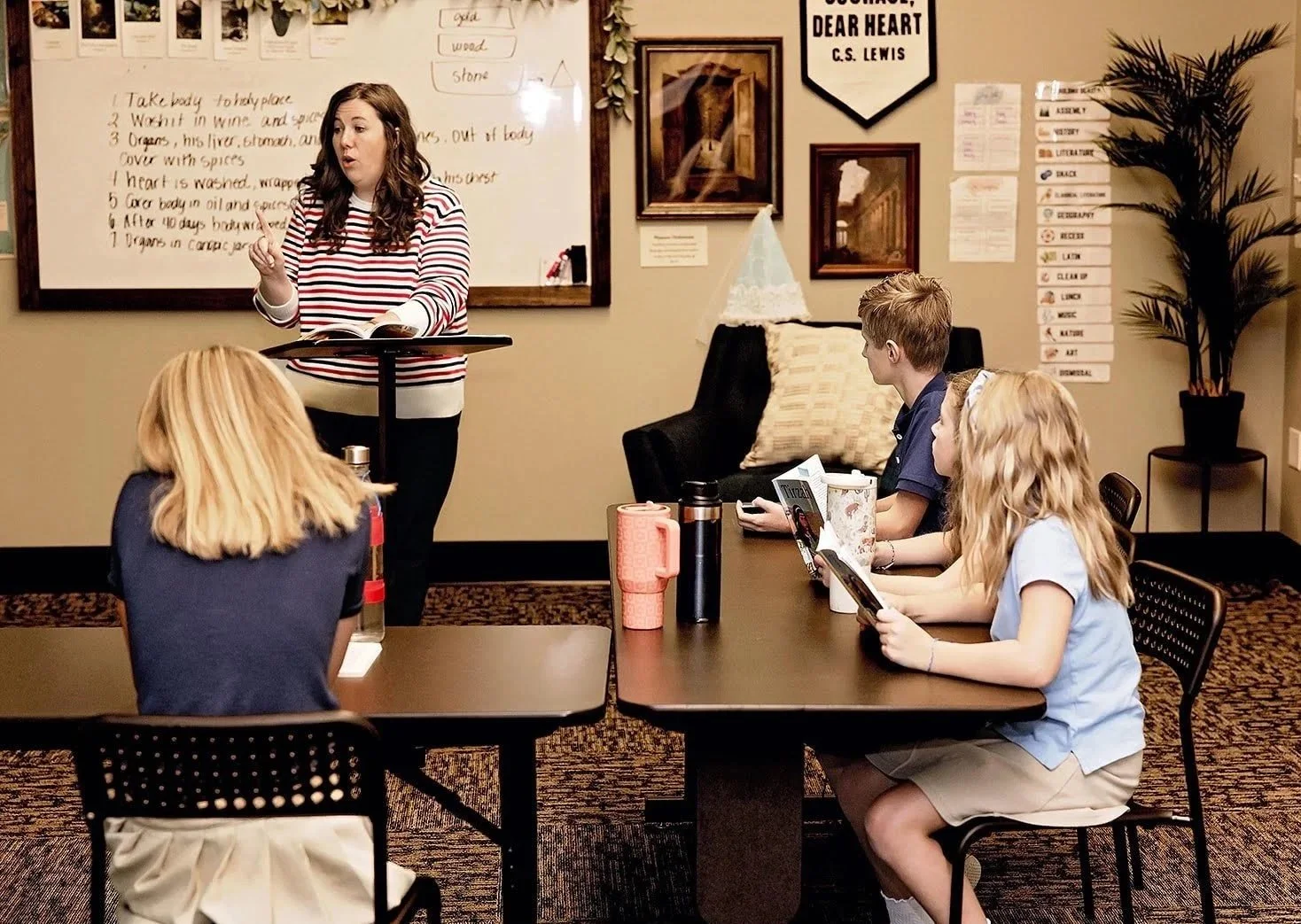
Connected learning. History, Scripture, art, music, and nature are taught as one story, not separate boxes.
Great stories and living books. Children read rich literature, fables, myths, and lives of great men and women instead of dry summaries.
Latin. Our students begin the language that shaped Western and Christian learning. It sharpens attention and builds vocabulary.
Recitation and memory. Children learn Scripture, poetry, and songs by heart.
Wonder at creation. Nature study and math teach children to see the order and beauty God built into the world.
A Movement That Is Growing
In the late twentieth century, parents and educators began to notice what modern schooling had lost, and they set out to recover an older and richer vision. Classical Christian schools have grown steadily since the 1980s, and today families across the country are choosing them. Cypress is proud to be part of that renewal as a member of the Society for Classical Learning.
